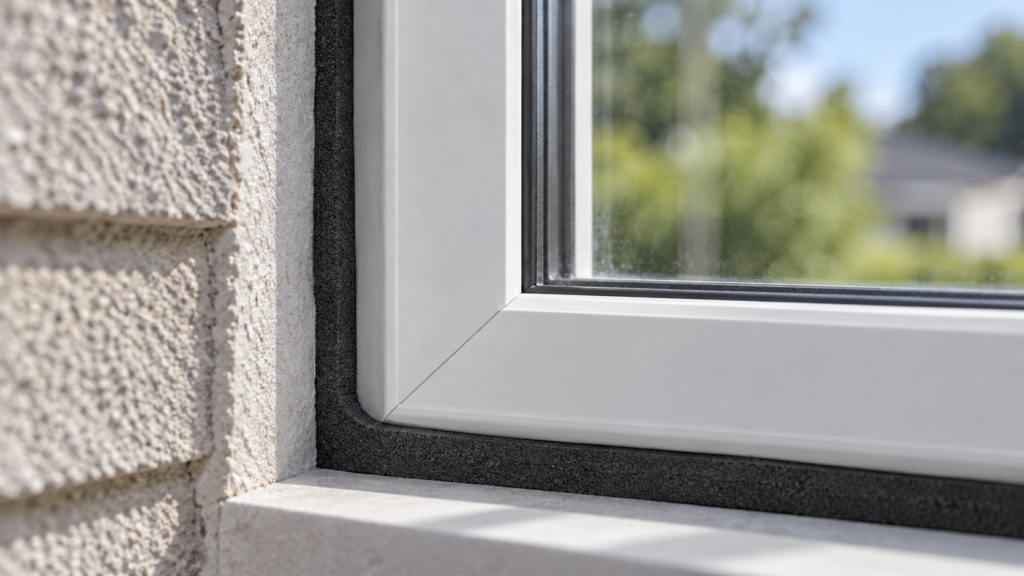
Windows and doors are only as effective as the seals surrounding them. For contractors and builders, choosing the right foam tape for windows and doors can improve energy efficiency and help create a more durable finished assembly. However, not every foam tape serves the same purpose. Understanding the differences between different foam tapes makes it easier to select a sealing product that fits the application rather than relying on a one-size-fits-all solution.
Why Foam Tape Works for Windows and Doors
Window and door assemblies contain numerous places where two surfaces meet. Although those surfaces may appear flat, small gaps and inconsistencies can result from manufacturing tolerances, installation conditions, building movement, and differences between materials.
Foam tape creates a resilient barrier in these spaces. When compressed between surfaces, the foam conforms to small irregularities and maintains contact across the joint. This reduces pathways for unwanted air and moisture.
Closed-cell foam is especially useful in applications exposed to the outdoors because its cell structure resists moisture penetration. Depending on the material and adhesive system, foam tape can also provide resistance to temperature changes, which can be beneficial in window and door sealing.
Understanding Compression Seals
Compression is central to how many foam seals perform. The goal is to have a foam that is thick enough to contact both surfaces and compress sufficiently to create consistent sealing pressure. Too little compression can leave small channels where air, water, or dust can enter a building. Too much compression can permanently deform the foam and reduce its ability to maintain sealing force over time.
Thickness and density also need to be considered together. A thicker, softer foam may work well where gap dimensions vary significantly, and closure force is limited. A denser foam can provide greater compression resistance in assemblies that require more support.
Foam Tape vs Weatherstripping
Foam tape and weatherstripping are closely related, but the terms can describe different sealing applications. Weatherstripping generally refers to materials installed around operable windows and doors to limit airflow and environmental intrusion when the unit is closed. These seals may experience thousands of compression and recovery cycles throughout their service life.
Adhesive-backed foam tape can serve as weatherstripping if the material has the appropriate recovery and environmental durability characteristics. It is commonly applied around window sashes, door frames, access points, and similar locations that require a compressible seal.
Choosing Foam Tape by Window Type
Different window designs may create different sealing conditions. Fixed windows typically have few moving components, allowing foam materials to remain under relatively consistent compression. Long-term compression resistance and environmental durability are important in these applications.
Operable windows create a more dynamic environment. Sliding, casement, awning, and similar units repeatedly load and unload the seal. Foam used around these openings needs good elastic recovery so it can return to its original shape after the window opens.
Commercial window and curtain wall systems may introduce additional challenges due to larger glass areas, greater wind exposure, and more demanding environmental conditions. Material compatibility with aluminum, glass, coatings, and other substrates should be evaluated carefully.
Choosing Foam Tape for Doors
Doors present many of the same challenges as windows, but repeated movement and larger gaps can make material selection particularly important. Exterior entry doors need seals that withstand frequent opening, temperature changes, moisture, and long-term compression. Foam should recover effectively after each cycle while remaining durable enough to resist wear.
Commercial doors may experience significantly higher use frequency, placing additional demands on compression recovery. Glass doors may also incorporate glazing tape around fixed glass components while using separate foam seals around moving portions of the assembly.
For large doors or access panels, closure force is another consideration. Foam that is too dense or thick can make the door difficult to close and place unnecessary stress on hinges and latches. The best solution creates enough pressure to seal the opening without interfering with normal operation.
Consider Environmental Exposure
Exterior window and door seals experience conditions that interior applications may never encounter. Sunlight, rain, humidity, freezing temperatures, and summer heat can all influence foam and adhesive performance.
UV resistance is especially important when foam will receive direct or indirect sunlight. Moisture resistance matters anywhere rain, condensation, or humidity is expected. Temperature performance should account for both seasonal extremes and repeated thermal cycling.
What Contractors Should Look for Before Buying
Selecting foam tape should begin with the actual requirements of the opening. Contractors should know the approximate gap dimensions, mating materials, expected compression, and whether the seal will remain stationary or experience repeated opening and closing.
Environmental conditions should then be considered alongside installation requirements. A product used on an exterior commercial window may require very different performance characteristics than foam installed around an interior door.
Price is naturally part of the purchasing decision, but material cost should be weighed against installation efficiency and service life. A lower-cost foam that requires replacement or allows callbacks due to sealing problems can quickly become more expensive than a material properly matched to the application.
When specifications are uncertain, testing a sample within the actual assembly can help confirm fit, compression, adhesion, and ease of installation before purchasing larger quantities.
Find the Right Foam Sealing Solution with Gaska
Choosing the right foam tape for windows and doors depends on matching foam thickness, density, compression behavior, adhesive performance, and environmental resistance to the specific window or door system.
Gaska Tape offers engineered foam products for a wide range of window, door, glazing, and construction applications. Our team can help evaluate gap dimensions, substrates, compression requirements, and environmental conditions to identify a foam solution suited to your project.
Explore Gaska’s foam products to compare available materials, or contact our team to discuss your window or door sealing requirements and request samples for evaluation.