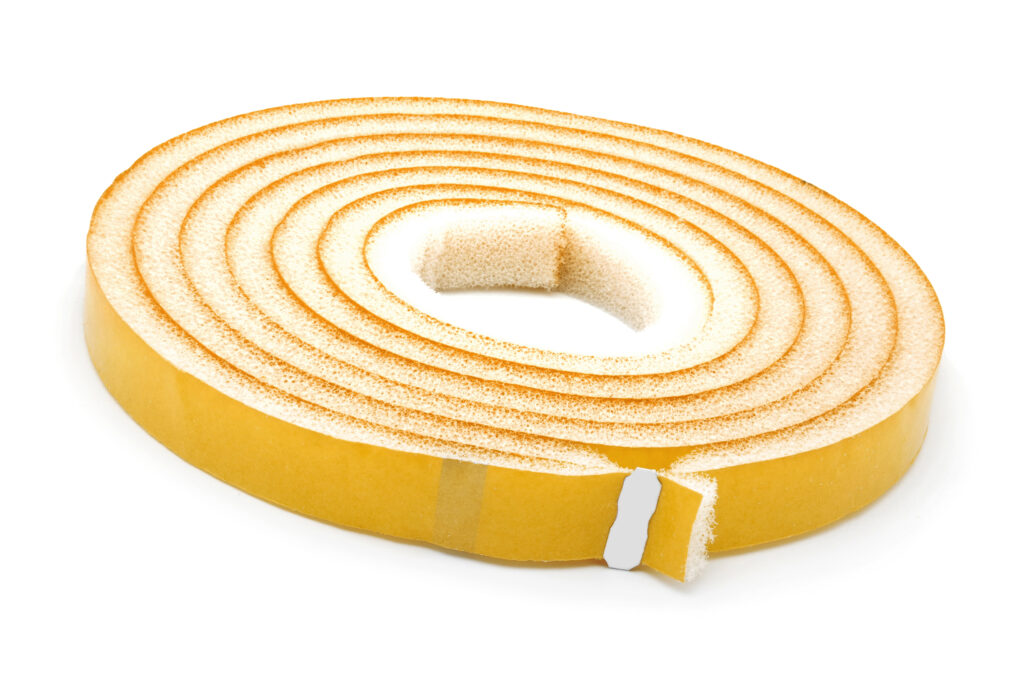
Heat is one of the most demanding conditions a sealing material can face. Elevated temperatures can affect adhesives, change foam properties, and accelerate material aging, making thermal performance a critical consideration in many industrial applications. Choosing the right heat-resistant foam tape is crucial for long-term reliability in modern manufacturing and industrial applications.
How Does Heat Affect Foam Tape?
Foam tape is used in many industrial and utility applications because it does more than adhere two surfaces together. Quality foam tape absorbs movement, resists environmental exposure, and maintains sealing performance over time. However, heat exposure can place additional stress on both the foam substrate and the adhesive system.
The response to elevated temperatures depends largely on the foam formulation. Different materials retain their mechanical properties at different temperature ranges, making material selection one of the most important design decisions.
As temperatures rise, some foam materials begin to soften, reducing their ability to maintain sealing pressure and compression. Adhesives may lose cohesive strength, resulting in edge lifting or bond failure, which can be dangerous in some industrial applications. Continuous thermal expansion and contraction can also introduce stress at the bond line, particularly when different materials expand at different rates.
While many industrial adhesive systems are formulated for elevated temperatures, every adhesive has operating limits that should be considered during product selection.
Choosing the Right Heat-Resistant Foam Tape
There is no universal foam tape for every high-temperature application. The appropriate material depends on operating temperature, exposure duration, environmental conditions, and mechanical demands.
Closed-Cell PVC Foams
Closed-cell PVC foams are commonly selected for applications requiring a balance of sealing performance, durability, and moderate temperature resistance. They also provide good resistance to moisture and weather, making them suitable for both indoor and outdoor environments.
Polyolefin Foams
Polyolefin foams are often used where lightweight construction and thermal stability are important. Their closed-cell structure helps maintain dimensional stability while providing effective sealing performance in many industrial applications.
Specialty Foams
For applications requiring greater resistance to elevated temperatures, specialty closed-cell foam materials may offer improved long-term thermal performance. Engineered products such as Gaska’s Eco Seal® Series are designed for temperatures from -40°F to 250°F. Foam tapes like these are created for demanding industrial, automotive, and construction applications where dimensional stability, sealing performance, chemical resistance, and wide temperature performance may be required.
Material selection should always consider continuous operating temperature rather than short-term exposure alone. A foam that tolerates brief temperature spikes may not provide reliable performance during years of continuous service.
The Role of Adhesive Performance at Elevated Temperatures
The adhesive system is just as important as the foam itself. In many applications, adhesive failure occurs before the foam substrate reaches its performance limits.
Acrylic Adhesives
High-performance acrylic adhesives are commonly used in industrial foam tapes because they offer excellent resistance to elevated temperatures, UV exposure, and environmental aging. They also maintain bond strength across a wide variety of substrates, including metals, painted surfaces, and many plastics.
Rubber Adhesives
Rubber-based adhesive systems often provide higher initial tack, but depending on the formulation, they may not provide the same long-term thermal stability as acrylic systems in continuously elevated temperatures.
Selecting the correct adhesive requires evaluating both the operating environment and the substrate materials. Surface energy, thermal cycling, and mechanical loading all influence long-term bond performance.
Common Failure Modes in High-Heat Applications
Understanding how foam tape fails under heat can help prevent premature seal failure during product design.
One common issue is compression set. When foam remains compressed while exposed to elevated temperatures for extended periods, it may lose its ability to recover, particularly if the foam tape was not designed for high-heat industrial applications. As sealing pressure decreases, gaps can develop that allow air, dust, moisture, or vibration to pass through the assembly.
Adhesive degradation is another frequent concern. Excessive heat can reduce adhesive strength, causing edge lift or complete bond failure if the adhesive system is not matched to the application. Thermal expansion also creates challenges. When metal, plastic, and glass components expand at different rates, additional stress is placed on the foam tape. Materials with sufficient flexibility and resilience are better able to accommodate this movement without compromising the seal.
Finally, accelerated material aging may occur in continuously hot environments. Long-term exposure to elevated temperatures can gradually reduce flexibility, resilience, and overall sealing effectiveness.
Applications That Demand High-Temperature Performance
Heat-resistant foam tape is used throughout industrial manufacturing where sealing performance must remain consistent despite elevated operating temperatures. Here are some situations and types of equipment that may need high-heat foam tape.
HVAC Equipment
HVAC equipment is one of the most common examples where foam tape must handle temperature variation, air movement, vibration, and environmental exposure. Air handling units, duct systems, rooftop equipment, and ventilation components often experience significant temperature variation while requiring dependable sealing against air leakage and vibration. Engineered foam products designed for HVAC applications help maintain efficiency while reducing operational noise.
Automotive Applications
Automotive applications also place demanding thermal requirements on foam materials. Engine compartments, battery systems, lighting assemblies, and under-hood components all experience continuous exposure to elevated temperatures alongside vibration and environmental contaminants.
Industrial Machinery
Industrial machinery presents another challenging environment. Manufacturing equipment, electrical enclosures, process equipment, and mechanical housings frequently generate heat during operation. Foam tape used in these systems must continue sealing while accommodating thermal expansion and ongoing vibration.
Appliances, lighting systems, and power equipment similarly depend on foam sealing materials capable of maintaining consistent performance throughout repeated heating and cooling cycles.
High temperatures do not automatically rule out foam tape, but they do make product selection more important. A tape that performs well in a standard indoor application may not maintain the same seal strength, recovery, or adhesive bond when exposed to continuous heat, thermal cycling, vibration, or chemical contact. By evaluating the full operating environment instead of temperature alone, manufacturers can select foam materials and adhesive systems that support longer service life and more reliable performance.
How Gaska Supports High-Temperature Applications
At Gaska Tape, we work with manufacturers to develop foam sealing solutions for demanding thermal environments. Our engineering team helps evaluate operating temperatures, substrate materials, compression requirements, and environmental exposure to recommend foam and adhesive systems that match the application’s performance goals. Contact Gaska Tape to discuss your application, request samples, or work with our engineering team to identify the right foam solution for your thermal environment.