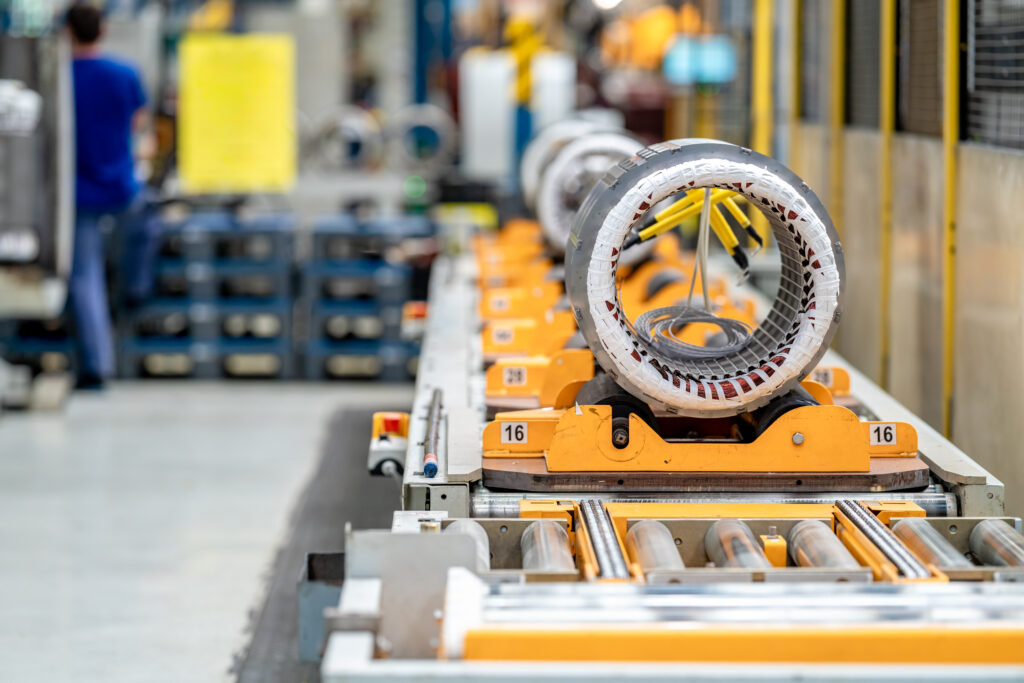
Assembly efficiency has become a major competitive advantage for manufacturers across nearly every industry. In many facilities, even small delays at a single station can create bottlenecks that impact output, lead times, and overall profitability. One of the most overlooked drivers of assembly efficiency is material selection. Many teams focus on part count and equipment upgrades, but the materials chosen for sealing, bonding, and cushioning often determine how complex the assembly process becomes. Foam materials, especially adhesive-backed foam tapes and gaskets, are a strong example. When engineered into the process correctly, foam can serve as a practical manufacturing improvement tool and a sealing solution.
The Hidden Cost of Traditional Assembly Methods
Many traditional assembly methods add time and labor in ways that are easy to overlook. Mechanical fasteners such as screws, bolts, and rivets require drilling, alignment, torque control, and inspection. Even though hardware is inexpensive, the labor of installing each screw can quickly add up, especially during high-volume production runs.
Liquid adhesives can also introduce hidden inefficiencies. Cure time delays, surface preparation requirements, clamping, and cleanup all add steps to the process. In some cases, assemblies must be staged or held in place until the adhesive reaches full strength, which increases work in progress and slows down line throughput.
Manual alignment is another major contributor to labor cost. This process requires parts to be positioned precisely, which requires high operator skill and attention to detail, ultimately taking more time and money. Quality inspections and rework are common in these environments, not necessarily because the design is flawed, but because the process allows too much variation.
In many cases, assembly time is driven less by part count and more by process complexity. The more steps, the more complexity and part count for delays, errors, and rework.
How Foam Materials Simplify Assembly Processes
Foam materials can simplify manufacturing by reducing steps, eliminating cure time, and improving consistency. This is especially true when foam is supplied in a format designed for fast installation.
Peel and Stick Installation
One of the biggest advantages of foam tape and adhesive-backed gaskets is the peel-and-stick installation process. Pressure-sensitive adhesives allow for quick peel-and-stick bonding without mixing, curing, or additional equipment. Assemblies can often be handled immediately after application, which supports faster line throughput and fewer production interruptions.
Because there is no curing time, foam materials can reduce the need for tooling, fixturing, and clamping. This also helps streamline workstations, since operators do not need to manage adhesive dispensing systems or staged curing areas. In many production environments, the ability to apply a gasket quickly and move directly to the next step creates measurable cycle time savings.
Sealing and Bonding
For example, a single component can reduce labor by combining multiple functions into a single component. In many assemblies, foam tape not only seals a gap. It may also provide cushioning, reduce vibration transfer, and compensate for surface variation between mating parts.
This multi-function performance allows manufacturers to replace multiple components with a multi-functional foam solution. Fewer parts typically mean fewer installation steps, fewer opportunities for error, and fewer means of failure in the final product. Over time, simplifying the bill of materials and the assembly workflow can significantly reduce labor hours per unit.
Reduced Labor Through Error Prevention
Labor costs are not only driven by how long a task takes. They are also driven by how often mistakes occur. Foam materials can reduce labor requirements by improving installation repeatability and minimizing operator-dependent variability.
Pre-cut and die-cut foam components help ensure that each part is perfectly sized to the component, reducing the risk of misalignment. It also lowers the skill threshold required for consistent installation, which can be especially valuable when staffing is limited or turnover is high.
In many facilities, improving first pass yield is one of the most effective ways to reduce labor costs. When fewer units require rework, teams spend less time troubleshooting, disassembling, and correcting issues. Custom converting services can support this goal by supplying foam parts that are optimized for the product design and assembly method.
Foam Materials vs Liquid Adhesives: A Time Comparison
Liquid adhesives often appear efficient on paper, but they can introduce time-consuming steps in real-world production. Setup time includes equipment preparation, handling, and surface prep. Cleanup is also a factor, especially when adhesive spills or overspray create additional labor demands.
Cure time is another major difference. While some liquid adhesives offer fast set times, many still require a holding period before the assembly can be moved, tested, or packaged. Foam tape and peel-and-stick gasket solutions eliminate this delay, allowing immediate handling and faster movement through the line.
Adhesive variability can also cause line disruptions. Changes in temperature, humidity, mix ratios, or dispense volume can lead to inconsistent bond quality, often resulting in additional inspections and unexpected rework. Foam materials provide a cleaner, additional, and more controlled process, supporting both productivity and workplace safety.
A side-by-side time comparison is often useful when evaluating assembly methods. In many cases, foam tape assembly reduces total labor, not because the application step is dramatically faster, but because it removes multiple downstream steps such as clamping, curing, and cleanup.
Faster Changeovers and Line Flexibility
Manufacturing efficiency depends on flexibility as much as speed. Many production lines today are expected to handle short runs, frequent changeovers, and mixed model builds. Foam materials support this kind of flexibility because they are easy to integrate and adjust.
Foam tape and die-cut gaskets can enable quick product changeovers without major equipment changes. They also support faster prototyping and pilot runs since manufacturers can test fit and performance quickly without waiting for new tooling or complex adhesive process adjustments.
This flexibility reduces downtime during configuration changes, making foam an ideal solution for manufacturers that need to remain responsive to shifting demand.
Lower Rework
Rework is one of the most expensive forms of labor in manufacturing. It disrupts workflow, consumes skilled labor hours, and increases the risk of damaging parts during disassembly. Foam materials can reduce rework by delivering more uniform compression and more consistent bonding performance.
When foam seals are applied correctly, they create a predictable sealing interface that is less dependent on operator technique. This reduces the likelihood of seal failures caused by uneven placement, inconsistent adhesive coverage, or improper compression. In many applications, improved sealing reliability also reduces the need for post-assembly adjustments and additional inspection steps.
Long-term performance matters as well. A seal that fails in the field can lead to warranty claims, service calls, and customer dissatisfaction. Foam materials engineered for durability help reduce downstream costs by maintaining performance across temperature changes, charring exposure, and repeated-use cycles. Unders also, where foam performance, such as compression set resistance, plays a key role in long-term reliability.
Applications Where Foam Delivers the Greatest Long-term Earnings
Foam materials provide the greatest assembly benefits in applications where sealing, cushioning, and bonding must happen quickly and consistently. This can include:
- HVAC
- Electronics
- Automotive and Transportation
- Appliance Manufacturing
- Consumer Product Assembly
These industries are often high-volume and require noise or vibration control and consistency in application.
Custom Foam Solutions Amplify Cost Savings
While standard foam tapes can improve efficiency, custom foam solutions often deliver the greatest labor savings. Die-cut parts reduce trimming, waste, and installation time. Pre-applied adhesives eliminate secondary bonding steps and help ensure consistent placement.
Foam thickness and density can also be optimized for the assembly method. Some applications require low compression force for easy closure, while others need higher-density foam for durability under vibration or long-term compression. These variables support both manual and long-term robotic automation, helping manufacturers scale efficiently without sacrificing quality.
Designing Foam Into the Assembly Process Early
The greatest benefits come when foam is considered early in the product design process. Involving material selection during the design stage helps ensure that foam components support both performance requirements and manufacturing realities. When engineering and manufacturing teams collaborate early, they can reduce assembly steps, simplify tooling, and create more repeatable processes.
Foam materials also support DFMA strategies by reducing part complexity, improving tolerance accommodation, and enabling faster assembly methods. In many cases, designing for peel-and-stick installation can eliminate unnecessary fastening or bonding operations, creating a more streamlined workflow from the start.
Foam Materials as a Manufacturing Efficiency Strategy
Reducing assembly time and labor costs requires more than faster equipment. It requires smarter process design and repeatable installation methods. Foam materials offer a scalable solution that can improve manufacturing efficiency by eliminating cure time, reducing part count, preventing installation errors, and improving consistency in quality.
When engineered correctly, foam tapes and gaskets support faster production cycles, fewer rework events, and more predictable long-term performance. For manufacturers focused on throughput and reliability, foam materials are a practical strategy for achieving both.
Contact our team to discuss your application, evaluate material options, or request samples for testing in your assembly environment.