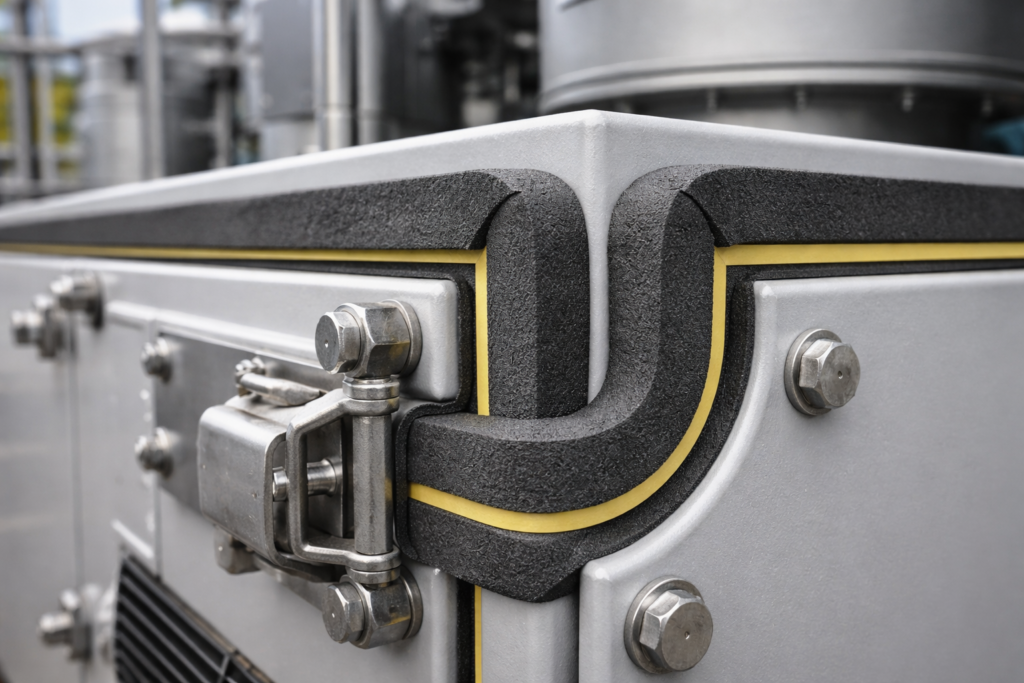
Dust and airborne particulates may seem harmless at first, but in many industrial applications, they can cause serious performance issues over time. Fine dust can infiltrate enclosures, clog moving components, interfere with electronics, and accelerate wear in equipment that depends on clean, protected internal systems. In outdoor environments, industrial facilities, and high-traffic production areas, dust exposure is often constant, which makes reliable sealing an essential part of product design.
Why Dust Sealing Matters in Real-World Applications
Dust and particulates can enter equipment through small gaps around doors, access panels, seams, and cable entry points. These small entry points are often unavoidable, especially in enclosures that require frequent servicing or regular opening and closing. Over time, even small accumulations of dust can impact performance and reliability.
For certain machinery and control systems, dust buildup can quickly lead to overheating and damage to the machine. In mechanical systems, particulate intrusion can increase friction, cause binding, and shorten service life. In manufacturing settings, dust contamination may also affect product quality, especially when equipment operates near sensitive materials or precision processes.
Foam gaskets and sealing tapes are designed to create a continuous barrier that blocks particulate intrusion while still allowing the enclosure or assembly to function as intended.
How Foam Seals Stop Dust Intrusion
Foam sealing works by creating consistent contact pressure between two mating surfaces. When foam is compressed, it fills in bumps and gaps on the surface, closing off the small pathways through which dust can pass. This is one reason foam is often preferred over rigid sealing materials in applications where surfaces may vary slightly, experience tolerance changes, or undergo minor distortion during assembly.
Closed-cell foam materials are particularly skilled at preventing air movement, ultimately reducing dust contamination. This helps the seal maintain integrity even when exposed to outdoor conditions, vibration, or repeated opening and closing cycles.
In addition to blocking dust, foam seals can also reduce vibration transfer and noise, which can be an added benefit in industrial equipment and enclosure design.
Dust Sealing Foam in IP and NEMA Rated Enclosures
Many equipment enclosures are designed to meet specific protection standards, which often include dust resistance requirements. In these cases, foam gasket selection is directly tied to performance targets such as an IP rating.
A foam gasket IP rating requirement typically depends on whether the enclosure needs protection against limited dust ingress or complete dust-tight performance. The sealing design must account for consistent compression, reliable closure force, and long-term durability under environmental stress.
In North American industrial environments, NEMA enclosure sealing is a common requirement. NEMA ratings consider not only dust exposure, but also conditions such as water spray, corrosion risk, and outdoor weathering. Foam gaskets used in NEMA-rated systems must maintain sealing force over time and resist degradation that could compromise the enclosure protection level.
Because IP and NEMA requirements vary by application, selecting the right foam often requires balancing compression performance, environmental resistance, and the enclosure’s mechanical design.
Key Foam Properties for Dust and Particulate Protection
Not every foam performs the same in dust-sealing applications. A reliable seal depends on selecting foam materials with properties that match the environment and the enclosure design.
Compression Set Resistance
A foam gasket must recover after compression so it can continue applying sealing pressure over time. If the foam takes a permanent set, the seal may weaken, allowing dust to enter through gaps that reopen during service life.
Density
Lower-density foam may compress easily, which can be helpful when the closure force is limited. Higher-density foam can provide stronger sealing pressure and improved durability in applications exposed to vibration, frequent access, or long-term compression.
Environmental Resistance
Dust-sealing foam used outdoors or in industrial settings may be exposed to temperature swings, humidity, UV radiation, or chemical exposure. Selecting foam with the right resistance profile helps maintain sealing performance and prevents premature breakdown.
Common Dust Sealing Applications
Dust-sealing foam is widely used in both industrial and commercial applications. Electrical enclosures, control cabinets, junction boxes, and outdoor telecom equipment often rely on foam gaskets to protect internal electronics from particulate contamination. HVAC and ventilation equipment also uses foam sealing to prevent dust from entering sensitive components and to reduce air leakage around access panels.
In automotive and transportation applications, foam gaskets can help protect sensors, housings, and electronic modules from road dust and debris. Industrial machinery and automation systems may also use foam seals to protect bearings, motors, and internal assemblies from particulate intrusion that can shorten operating life.
Across these industries, the goal is the same. A properly designed foam seal reduces the risk of contamination and helps equipment perform reliably in demanding conditions.
Installation Factors That Affect Dust Sealing Performance
Even a high-quality foam gasket can underperform if installation practices are inconsistent. Surface preparation is essential. Dust, oil, moisture, and debris on the bonding surface can reduce adhesive strength and create leak paths at the gasket edge. Applying firm, uniform pressure during installation helps ensure full adhesive contact and consistent sealing engagement.
Compression control also matters. If the foam is under compression, it may not fully close gaps. If it is over-compressed, the foam may lose resilience and sealing force over time. Proper gasket thickness and joint design help ensure the foam operates in its intended compression range.
For enclosures that require repeated opening, selecting foam with good recovery and fatigue resistance is especially important. This helps maintain sealing performance through service cycles and prevents gradual loss of protection.
Gaska’s Approach to Dust and Particulate Sealing
At Gaska Tape, we engineer foam sealing solutions tailored to meet dust protection needs across various environments. Our expertise helps engineers achieve reliable enclosure performance and long-lasting seals that align with their specific application requirements.
Our team works with customers to evaluate foam density, thickness, compression performance, and adhesive systems for the demands of the application. With precision conversion capabilities, we can provide foam gasket formats that support efficient installation and consistent sealing. By combining engineering expertise with flexible manufacturing, we help customers build sealing solutions that perform in real-world conditions.
Dust intrusion can compromise equipment performance long before failure is visible. With the right foam sealing design, you can protect critical systems, reduce maintenance risk, and support long-term reliability. Contact Gaska Tape to discuss your application, review enclosure sealing requirements, or request sample materials for evaluation.